Pick and place automation is an industrial automation process that uses mechanical systems, robotic devices, or specialized motion units to pick up components from one position and transfer them to another designated location.
It is widely used in manufacturing industries where products or components need to be transferred, positioned, sorted, or assembled repeatedly.
Compared with manual handling, an automated pick and place system can improve production consistency, reduce repetitive labor, and support continuous manufacturing operations.
A typical pick and place automation system may include:
A mechanical motion system.
A gripping or vacuum handling device.
Sensors and positioning components.
A programmable controller.
A feeding and material supply mechanism.
A safety and machine monitoring system.
Depending on the application, the system can use pneumatic actuators, servo motors, robotic arms, linear modules, or cam-driven pick and place units.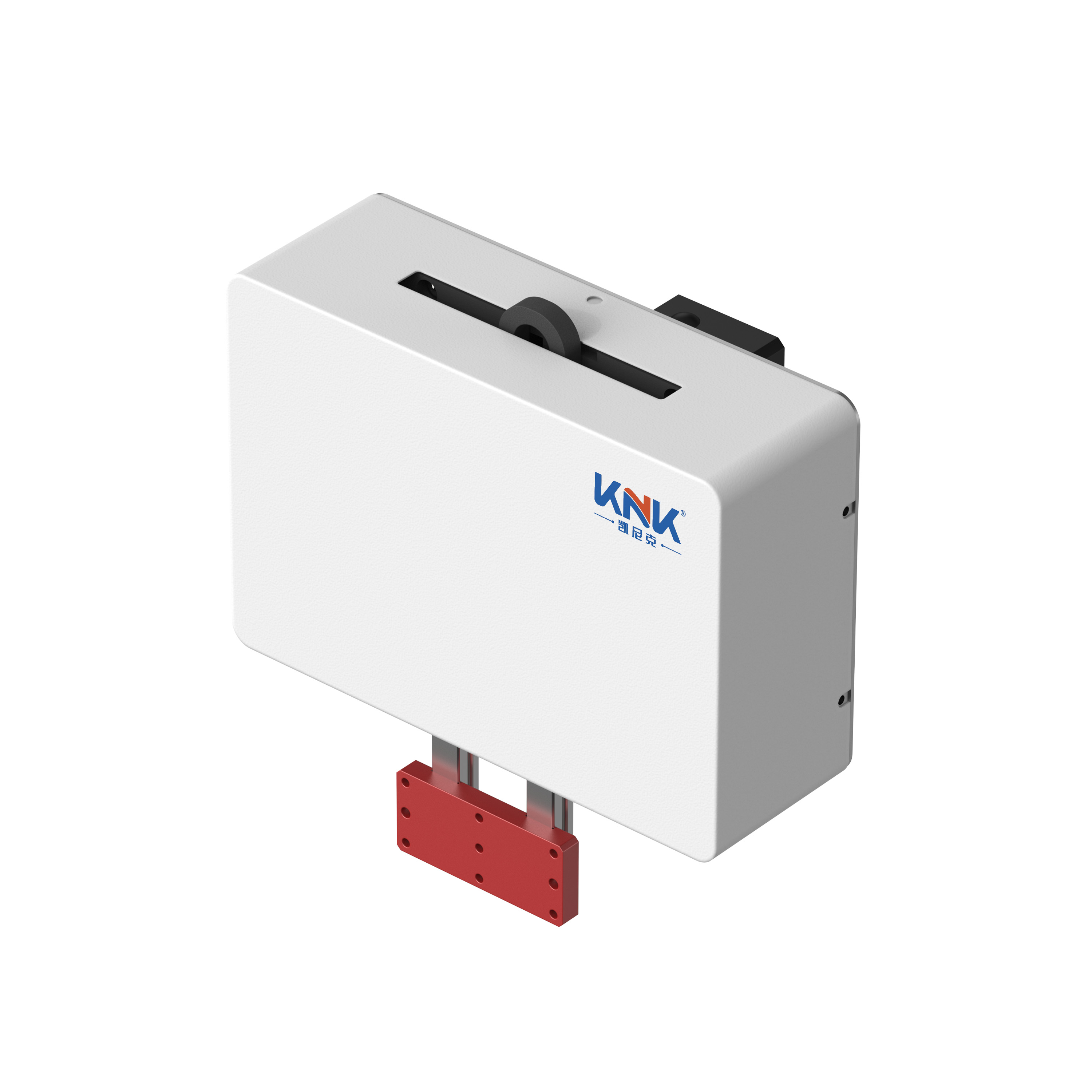
For industrial equipment manufacturers, selecting the right pick and place automation solution depends on product dimensions, weight, required cycle time, positioning accuracy, and production layout.
A pick and place automation system performs a series of coordinated movements to transfer components between predefined positions.
Although the mechanical design varies, the basic working process generally includes the following steps.
Components are supplied to the pickup position through a conveyor, feeder, vibrating bowl, tray, or other material handling equipment.
The feeding mechanism ensures that components reach the required pickup location.
Sensors, cameras, or mechanical positioning devices identify whether the component is ready for pickup.
For applications requiring visual recognition or flexible part orientation, machine vision systems can be integrated into the automation process.
The gripping device moves to the pickup position and collects the component.
Common picking methods include:
Vacuum suction.
Mechanical grippers.
Pneumatic gripping devices.
Magnetic gripping systems for suitable materials.
The gripping method should match the component's material, surface, geometry, and weight.
The motion mechanism transfers the component from the pickup position to the target location.
Depending on the required movement, the system may use linear actuators, servo-driven modules, robotic arms, or cam-driven mechanisms.
The component is released at the designated position.
For precision assembly applications, the placement process may require mechanical positioning, sensors, or closed-loop motion control.
After completing the placement operation, the system returns to the pickup position and begins the next cycle.
The controller coordinates the movement sequence to achieve the required production cycle time.
Different manufacturing processes require different pick and place mechanisms. The most suitable solution depends on movement requirements, production speed, flexibility, and component characteristics.
Robotic pick and place systems use industrial robots or collaborative robots to transfer components between different locations.
They can be configured with different gripping tools and movement paths.
Main characteristics:
Flexible movement paths.
Suitable for handling products in different orientations.
Can support complex material handling operations.
Compatible with machine vision and automated inspection systems.
Typical applications:
Packaging and sorting.
Product loading and unloading.
Component handling.
Flexible manufacturing systems.
Robotic systems are particularly useful when the pickup and placement positions change frequently or require complex movement paths.
Cartesian pick and place systems use linear motion axes arranged along X, Y, and Z directions.
The movement of each axis is coordinated to transfer components between defined positions.
Main characteristics:
Straight-line movement along defined axes.
Flexible working area configuration.
Suitable for repetitive positioning.
Easy integration with linear modules and electric actuators.
Typical applications:
Automated loading and unloading.
Electronic component placement.
Industrial assembly equipment.
Precision material transfer.
Cartesian systems are often selected for applications requiring structured movement paths and predictable positioning.
Pneumatic pick and place systems use compressed air to drive cylinders and gripping mechanisms.
They are commonly used in relatively simple handling operations.
Main characteristics:
Simple mechanical structure.
Fast operation in suitable applications.
Suitable for repetitive movement.
Can be economical for straightforward automation tasks.
However, pneumatic systems may have limitations when applications require flexible motion profiles, precise speed adjustment, or programmable positioning.
Servo-driven pick and place systems use servo motors and motion controllers to achieve controlled movement.
They can support programmable positions, adjustable speed, and coordinated motion sequences.
Main characteristics:
Programmable movement parameters.
Flexible acceleration and deceleration.
Suitable for multi-position operations.
Can support closed-loop positioning control.
Servo-driven systems are commonly used in precision assembly, electronic manufacturing, and automated handling equipment.
Cam-driven pick and place systems use mechanical cam mechanisms to generate predefined movement sequences.
They are particularly suitable for applications requiring repetitive, synchronized, and continuous motion.
A PPU (Pick and Place Unit) cam mechanism can coordinate different movement directions according to the designed cam profile.
Main characteristics:
Mechanically coordinated movement.
Repeatable motion sequences.
Suitable for continuous production cycles.
Can be integrated into automated assembly equipment.
Compared with general-purpose robotic systems, cam-driven pick and place units are often considered when the production process is relatively fixed and requires consistent repetitive movement.
A complete pick and place automation system integrates multiple mechanical and control components.
|
Component |
Main Function |
|---|---|
|
Feeding system |
Supplies components to the pickup position |
|
Motion mechanism |
Moves the gripping device between positions |
|
Gripper or vacuum tool |
Picks up and releases components |
|
Linear guide |
Supports and guides mechanical movement |
|
Motor or actuator |
Provides the required driving force |
|
Sensors |
Detect component position and operating status |
|
Controller |
Coordinates the operating sequence |
|
Safety system |
Supports safe machine operation |
The performance of the complete system depends on how these components work together.
For example, a high-speed actuator cannot guarantee a short production cycle if the feeding mechanism, gripping process, or component positioning becomes the limiting factor.
Therefore, the complete machine cycle should be evaluated during system design.
Pick and place automation offers several advantages for industrial production.
Automated systems can perform repetitive handling operations with consistent movement sequences.
This helps reduce manual handling time and supports higher production throughput when the entire process is properly configured.
Mechanical positioning systems and controlled motion mechanisms help place components at predefined locations.
This is particularly important in automated assembly and precision manufacturing.
Automating repetitive picking and placing operations can reduce operator workload and allow workers to focus on equipment monitoring, quality control, and other tasks.
Pick and place systems can be integrated into automated production lines to support repeated operations and coordinated machine cycles.
Different motion technologies can be selected according to the production process.
For example, robotic systems may be suitable for flexible handling, while cam-driven mechanisms may be more appropriate for fixed and repetitive production sequences.
A properly designed automated system can reduce variations caused by manual handling and help maintain consistent production procedures.
Pick and place automation is used across a wide range of manufacturing industries.
Electronic manufacturing often involves handling small components that require controlled positioning and careful transfer.
Applications include:
Electronic component feeding.
PCB assembly processes.
Connector and terminal handling.
Automated inspection and sorting.
Component transfer between workstations.
Depending on component size and production requirements, systems may use robotic mechanisms, servo-driven linear modules, or specialized pick and place units.
In packaging equipment, pick and place systems transfer products into containers, trays, cartons, or packaging positions.
Typical applications include:
Product loading.
Tray placement.
Bottle and container handling.
Packaging material transfer.
Automated sorting.
Automotive production lines use automated handling systems to transfer components between manufacturing and assembly stations.
Pick and place applications include small-part assembly, component loading, positioning, and material transfer.
Medical and laboratory automation systems may use pick and place mechanisms for sample handling, consumable transfer, and automated testing processes.
The gripping method and machine structure should be selected according to the product's physical characteristics and applicable cleanliness requirements.
In food processing and packaging equipment, automated pick and place systems can transfer products between processing, sorting, and packaging stations.
The system design should consider product shape, handling requirements, cleaning procedures, and the operating environment.
Precision assembly machines often require components to be transferred and positioned accurately before subsequent operations.
Pick and place automation can be integrated with linear modules, positioning platforms, sensors, and specialized mechanical units to complete these tasks.
Selecting the right pick and place automation solution requires evaluating the actual production process rather than focusing on a single machine specification.
Determine the dimensions, weight, material, and surface characteristics of the components.
These factors influence the gripping method, actuator capacity, and mechanical structure.
Cycle time refers to the time required to complete one full operating sequence.
When evaluating cycle time, consider:
Pickup movement.
Gripping and releasing time.
Transfer distance.
Acceleration and deceleration.
Placement and return movement.
Feeding and positioning time.
The complete machine cycle should be considered when comparing different systems.
Different production processes have different positioning requirements.
Simple material transfer may only require general positioning, while precision assembly may require more accurate placement and repeatability.
The complete system's accuracy depends on the motion mechanism, guide structure, feedback devices, gripping tool, and machine installation.
Determine whether the application requires:
Single-axis linear movement.
Two-axis or three-axis movement.
Rotary and linear combined movement.
Synchronized multi-position movement.
Continuous repetitive movement.
This helps identify the appropriate mechanical structure.
If product specifications and pickup positions change frequently, a programmable robotic or servo-driven solution may be more suitable.
For stable production processes with fixed movement paths, a dedicated mechanical pick and place unit may offer a more suitable solution.
Consider the available machine space, mounting dimensions, movement range, cable routing, and maintenance access.
A compact mechanical structure can be particularly important when integrating pick and place automation into existing production equipment.
For manufacturing processes that require repetitive and synchronized picking and placing, a PPU Cam Pick and Place Unit can be an effective mechanical solution.
PPU stands for Pick and Place Unit. A cam-driven PPU uses a specially designed cam mechanism to coordinate the movement of the picking and placing mechanism.
Unlike a general-purpose robotic arm, a cam-driven PPU is designed around a predefined mechanical movement sequence.
Its potential advantages include:
Coordinated mechanical movement.
Repeatable operating sequences.
Suitability for repetitive production processes.
Integration into automated assembly machinery.
Support for high-cycle production applications when properly designed.
A PPU Cam Pick and Place Unit can be considered for applications such as:
Automatic component loading.
Repetitive assembly operations.
Product transfer between stations.
Automated feeding and positioning.
High-cycle manufacturing equipment.
The appropriate PPU configuration depends on the required stroke, movement sequence, load, cycle time, installation space, and gripping method.
For OEM equipment manufacturers, choosing a suitable PPU requires evaluating the complete production process and mechanical integration requirements.
Standard pick and place equipment may not fully meet the requirements of customized industrial machinery.
OEM manufacturers often need systems designed around their specific products, production layouts, and machine operating cycles.
A custom pick and place automation solution may involve:
Mechanical configuration
Customized mounting dimensions.
Stroke and travel adjustments.
Special gripping structures.
Mechanical connection interfaces.
Motion configuration
Servo-driven linear movement.
Cam-driven pick and place mechanisms.
Multi-axis motion coordination.
Adjustable movement sequences where supported by the design.
Production requirements
Product weight and dimensions.
Required cycle time.
Positioning accuracy.
Continuous operating conditions.
Integration with upstream and downstream equipment.
A customized system should be evaluated as a complete mechanical and control solution to ensure compatibility with the production line.
KNK Technology focuses on industrial linear motion products and automation solutions, serving equipment manufacturers and OEM customers.
Our product range includes:
PPU Cam Pick and Place Units.
Linear Modules.
Electric Cylinders.
Gear Rack Linear Modules.
Linear Motor Modules.
Precision Circular Conveying Systems.
KNK's PPU Cam Pick and Place Unit is designed for automated equipment applications that require coordinated and repetitive picking and placing movements.
For customers developing automated assembly machinery, material handling equipment, and customized production lines, selecting the appropriate pick and place mechanism is essential to achieving stable and efficient machine operation.
KNK Technology supports industrial customers in evaluating suitable motion products and customized mechanical configurations according to their equipment requirements.
Contact KNK Technology to discuss your pick and place automation project and explore a suitable solution for your production equipment.
Pick and place automation is a manufacturing process that uses automated mechanical or robotic systems to collect components from one position and transfer them to another designated location.
Common types include robotic pick and place systems, Cartesian systems, pneumatic systems, servo-driven systems, and cam-driven pick and place units.
A PPU Cam Pick and Place Unit is a mechanical automation device that uses a cam mechanism to coordinate predefined picking and placing movements. It is commonly used in repetitive industrial production processes.
Robotic pick and place systems generally offer greater flexibility in movement paths and product handling. Cam-driven systems use mechanical motion profiles and are often suitable for fixed, repetitive production cycles.
Common industries include electronics, automotive manufacturing, packaging, food processing, medical equipment, laboratory automation, and precision assembly.
Yes. Systems can be customized according to product size, weight, movement distance, cycle time, gripping method, installation space, and machine control requirements.
Cycle time can be improved by optimizing transfer distance, acceleration and deceleration, gripping and releasing time, feeding efficiency, and movement coordination. The complete production process should be evaluated to identify the actual bottleneck.
Evaluate the manufacturer's product range, mechanical design capabilities, customization experience, technical support, and ability to understand your equipment's actual operating requirements.