In modern industrial automation, many production processes require multiple workpieces to be positioned at different intervals. Traditional linear motion systems usually move components along a fixed path, but applications involving changing workpiece spacing require a more flexible positioning solution.
A variable pitch linear module is designed to adjust the distance between multiple sliders or positioning points along a linear axis. By changing the spacing between moving components, it allows automated equipment to handle workpieces with different dimensions, transfer products between stations, and perform synchronized positioning operations.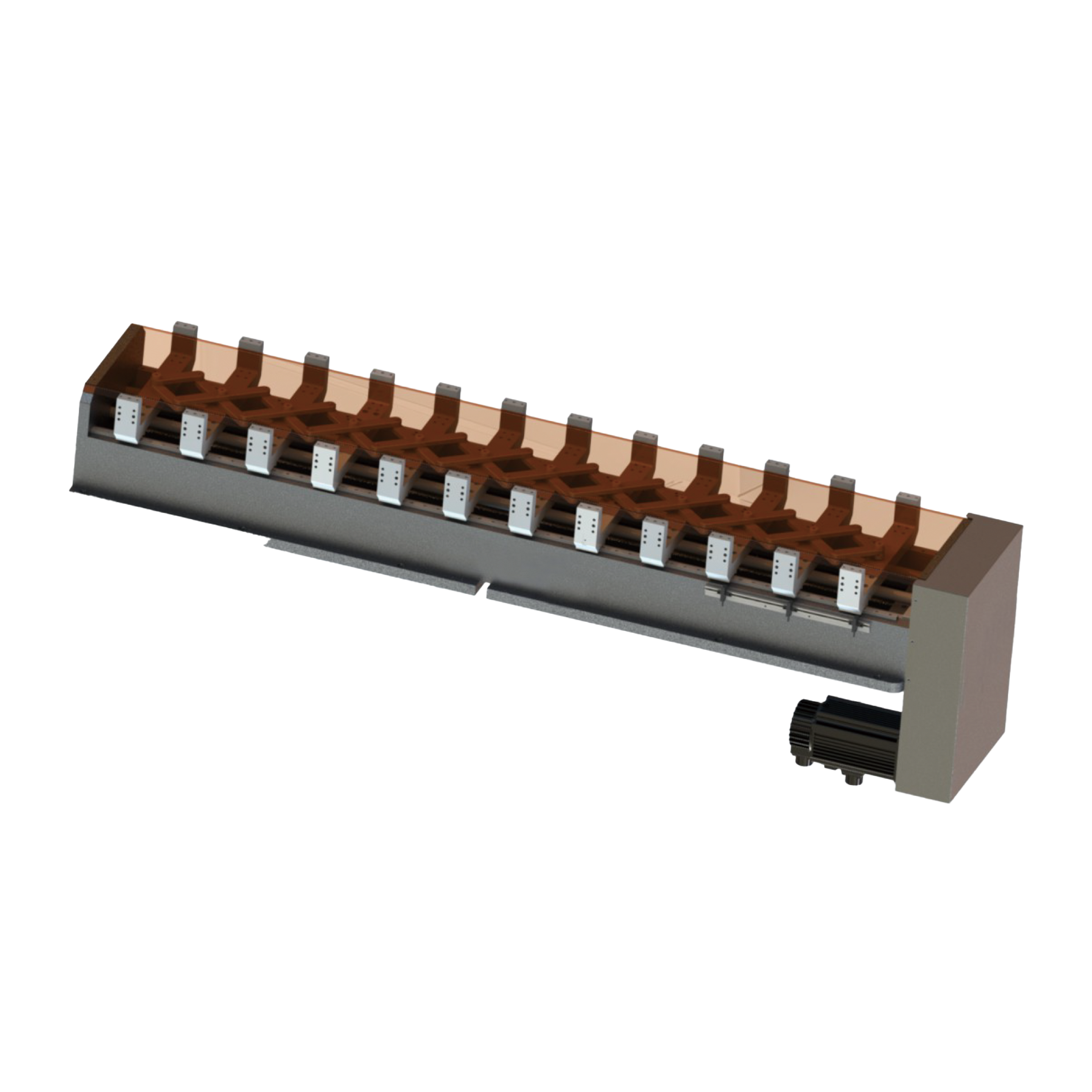
Variable pitch linear modules are commonly used in automated assembly equipment, multi-head pick-and-place systems, electronic component handling, packaging machinery, and precision positioning applications.
For OEM equipment manufacturers, a variable pitch linear module provides a flexible way to integrate adjustable spacing and coordinated linear movement into customized automation systems.
A variable pitch linear module is a specialized linear motion system that allows the spacing between multiple moving sliders or positioning units to be adjusted.
Unlike a conventional linear module with a single moving slider or fixed spacing arrangement, a variable pitch linear module can change the relative distance between multiple moving points according to predefined motion requirements.
For example, several workpieces may initially be arranged closely together on one production station. Before transferring them to another station, the equipment may need to increase the spacing between them.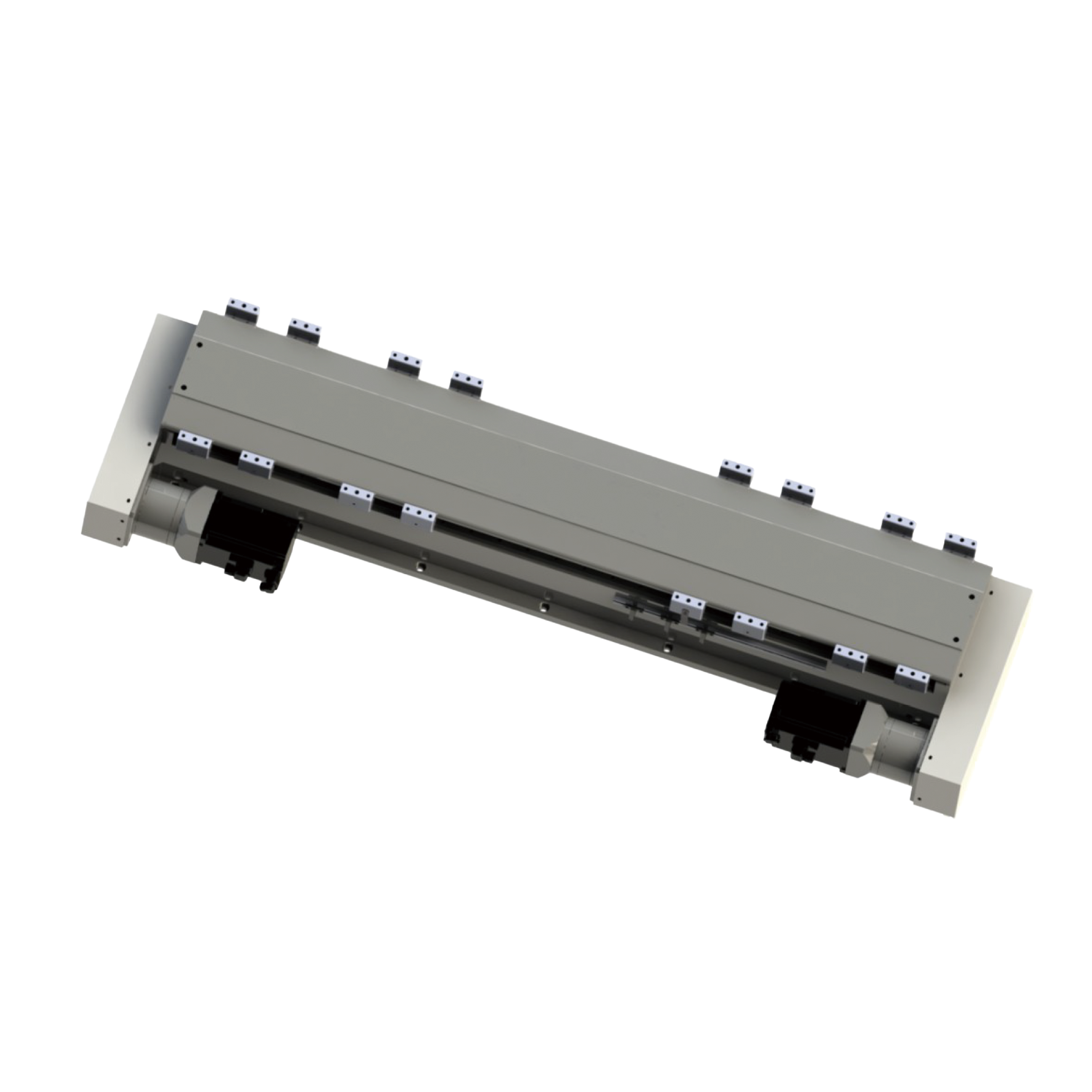
A variable pitch linear module can perform this adjustment through a coordinated mechanical or servo-driven motion system.
Its main functions include:
Adjustable spacing between multiple sliders
Synchronized movement of multiple positioning points
Flexible workpiece arrangement
Multi-position linear positioning
Integration with automated transfer systems
Customized stroke and spacing configurations
The actual adjustment range and motion performance depend on the mechanical structure, motor configuration, control method, and application requirements.
The working principle of a variable pitch linear module is based on coordinating the movement of multiple sliders to change their relative positions.
A typical system includes a linear guide structure, multiple moving sliders, a transmission mechanism, a driving motor, and a control system.
The module is equipped with multiple sliders or moving units installed along a common linear direction.
Each slider provides a mounting position for a workpiece fixture, gripper, positioning component, or other equipment.
The number of sliders and their initial spacing can be customized according to the machine design.
In servo-driven configurations, the motor provides controlled motion through a suitable transmission mechanism.
The system can coordinate the movement of multiple sliders to achieve the required spacing changes.
Depending on the design, the sliders may move simultaneously, independently, or according to a predefined motion sequence.
The control system changes the relative positions of the sliders to increase or decrease the distance between them.
For example:
Initial arrangement: multiple sliders are positioned close together.
Adjustment stage: the sliders move according to the programmed spacing requirements.
Final arrangement: the sliders reach the required pitch for the next production process.
This makes the module suitable for equipment that needs to handle products with different dimensions or transfer workpieces between production stations with different spacing requirements.
For applications requiring coordinated movement, the control system can synchronize the motion of multiple sliders.
The required synchronization performance depends on the servo system, mechanical transmission, feedback configuration, and control strategy.
A properly designed variable pitch linear module can help simplify multi-point positioning operations and reduce the need for multiple independent motion mechanisms.
The specific structure varies depending on the application, but a typical variable pitch linear module may include the following components.
|
Component |
Function |
|---|---|
|
Linear guide rail |
Supports and guides linear movement |
|
Moving sliders |
Provide mounting and positioning points |
|
Servo motor |
Provides controlled driving power |
|
Transmission mechanism |
Transfers motor movement to the sliders |
|
Control system |
Coordinates movement and pitch adjustment |
|
Mounting structure |
Connects the module to the machine |
|
Sensors and feedback components |
Support position monitoring when configured |
The design of each component influences the module's load capacity, positioning performance, operating speed, and overall stability.
For customized automation equipment, the mechanical structure should be designed according to the required number of sliders, adjustment range, workpiece weight, and operating cycle.
A variable pitch linear module offers several advantages for automated production systems.
One of its most important features is the ability to change the distance between multiple positioning points.
This is useful when workpieces need to be arranged differently at different stages of production.
For example, a machine may require closely spaced components during loading but wider spacing during inspection or assembly.
Multiple sliders can be coordinated through a common motion system.
This helps equipment designers implement multi-point movement without necessarily using separate linear actuators for every positioning point.
The specific synchronization method depends on the selected mechanical and control configuration.
Variable pitch adjustment allows one motion system to accommodate different product spacing requirements.
This is especially useful for production lines handling different product sizes or multiple product configurations.
Depending on the design, multiple positioning points can be integrated into one linear motion assembly.
This may reduce the number of separate actuators, mounting structures, and connection components required by the machine.
A variable pitch linear module can be designed around different stroke lengths, slider quantities, spacing ranges, motor configurations, and workpiece requirements.
This flexibility makes it suitable for specialized OEM automation equipment.
Variable pitch linear modules are particularly useful in production processes where multiple workpieces need to be transferred or repositioned with adjustable spacing.
In multi-head pick-and-place equipment, several products may need to be picked up simultaneously and placed at different intervals.
A variable pitch linear module can adjust the spacing between multiple positioning units to match the arrangement of the receiving station.
This is useful in automated assembly, component handling, and product transfer applications.
Electronic components and small precision parts are often processed through multiple stations with different positioning requirements.
Variable pitch systems can help adjust the spacing between multiple workpieces during transfer and positioning operations.
Packaging equipment may handle products with different sizes, arrangements, and packaging layouts.
A variable pitch linear module can adjust product spacing before feeding, sorting, grouping, or packaging operations.
In automated assembly systems, several workpieces may need to be positioned simultaneously for different processing operations.
Adjustable spacing allows the equipment to match the layout of different assembly stations.
Some machines require multiple workpieces to be transferred between stations with different center distances.
A variable pitch linear module can help coordinate the spacing adjustment and linear transfer process within a customized mechanical system.
Although both products belong to the linear motion category, they serve different functions.
|
Comparison |
Standard Linear Module |
Variable Pitch Linear Module |
|---|---|---|
|
Main function |
Linear movement |
Linear movement and spacing adjustment |
|
Moving structure |
Usually one or more sliders |
Multiple coordinated sliders |
|
Spacing |
Usually fixed or independently configured |
Adjustable according to design |
|
Motion control |
Single-axis or multi-axis positioning |
Coordinated multi-point positioning |
|
Application |
General linear transfer |
Adjustable-spacing automation |
|
System design |
Relatively straightforward |
Requires coordinated slider design |
|
Customization |
Stroke, load, speed, mounting |
Slider quantity, pitch range, stroke, synchronization |
A standard linear module is suitable for general-purpose linear positioning.
A variable pitch linear module is more appropriate when equipment needs to change the relative spacing between multiple workpieces or positioning points.
The selection should be based on the actual machine function rather than assuming that a variable pitch system is always a better replacement for a standard linear module.
Selecting the right variable pitch linear module requires consideration of both mechanical and motion control requirements.
Determine how many moving sliders or positioning units are required.
The number of sliders affects the mechanical design, total load, transmission arrangement, and control strategy.
Define the minimum and maximum spacing required between sliders.
This is one of the most important parameters because it directly determines the module's adjustment mechanism and overall dimensions.
Confirm the required linear travel distance for the entire module and the relative movement required between sliders.
The design should account for both working positions and adjustment positions.
Calculate the total workpiece weight and the load applied to each slider.
Consider dynamic forces during acceleration and deceleration, as well as the mounting orientation and external loads.
Determine the required adjustment time and overall equipment cycle time.
The motor and transmission mechanism should be selected according to the required speed, acceleration, load, and operating frequency.
Clarify the required positioning accuracy and repeatability for each slider.
If multiple sliders need to reach their target positions simultaneously, the control architecture and feedback configuration should be evaluated during the design stage.
Available installation space, mounting interfaces, cable routing, and connections to surrounding equipment should also be considered.
For OEM projects, providing a machine layout or 3D drawing can help the manufacturer evaluate the installation requirements.
Standard linear modules may not satisfy all the requirements of specialized automation equipment.
A custom variable pitch linear module can be developed according to the machine's working process and positioning requirements.
Common customization options include:
Number of moving sliders
Minimum and maximum pitch
Adjustable spacing range
Total stroke length
Servo motor configuration
Transmission structure
Workpiece mounting interfaces
Load and speed requirements
Synchronized movement control
Overall module dimensions
For example, a multi-head pick-and-place machine may require several sliders to move together while adjusting their spacing to match different product layouts.
In this case, the variable pitch module should be designed according to the number of pick-and-place heads, workpiece dimensions, target spacing, and machine cycle time.
A well-matched customized structure can help simplify equipment integration and improve the flexibility of the production process.
KNK Technology specializes in industrial linear motion products and customized automation motion solutions.
Its product range includes linear modules, electric cylinders, linear motor modules, gear rack linear modules, PPU cam pick-and-place units, and precision conveying systems.
For variable pitch applications, important design considerations include:
Adjustable pitch positioning
Servo motor-driven motion
Customized stroke requirements
Multiple-slider synchronous movement
Integration with automated equipment
Mechanical structure designed around the application
KNK Technology works with OEM equipment manufacturers to develop linear motion configurations according to different machine requirements.
When evaluating a variable pitch linear module, the engineering team needs to understand the number of sliders, required pitch range, load, speed, positioning requirements, and installation dimensions.
Providing 2D drawings, 3D models, or a description of the working process can help support technical evaluation and customized design.
If your automation equipment requires adjustable spacing and coordinated linear movement, contact KNK Technology to discuss a suitable variable pitch linear module solution.
Its main function is to adjust the spacing between multiple moving sliders or positioning points while providing linear movement. It is used in automation processes where workpieces need to be arranged at different intervals.
Yes. A suitable mechanical and control configuration can automatically adjust slider spacing according to programmed motion requirements. The adjustment method depends on the module's structure and drive system.
Many variable pitch linear modules use servo motors because servo systems support controlled positioning and coordinated motion. The specific motor configuration depends on the application.
Yes. Multiple sliders can be designed to move synchronously or according to a predefined motion sequence. The synchronization performance depends on the mechanical transmission, motor configuration, feedback system, and control strategy.
Common applications include electronics manufacturing, automated assembly, packaging machinery, multi-head pick-and-place systems, material handling, and multi-station positioning equipment.
Yes. Customization can include slider quantity, pitch adjustment range, stroke length, load capacity, motor configuration, mounting dimensions, and motion control requirements.
The most useful information includes the number of sliders, minimum and maximum pitch, stroke length, workpiece weight, required speed, positioning requirements, installation dimensions, and application details. Drawings or 3D models are also helpful.