In modern industrial automation, manufacturers are constantly seeking ways to improve productivity, reduce cycle times, and simplify machine structures. One common requirement in automated assembly lines, packaging systems, semiconductor equipment, and material handling applications is the ability to move multiple workpieces simultaneously.
This leads many engineers to ask:
Can a linear module support multi-slider synchronous motion?
The answer is yes. With the right mechanical design and drive system, a linear module can be configured with multiple sliders that move together in a synchronized manner, allowing a single motion platform to handle multiple products or operations at the same time.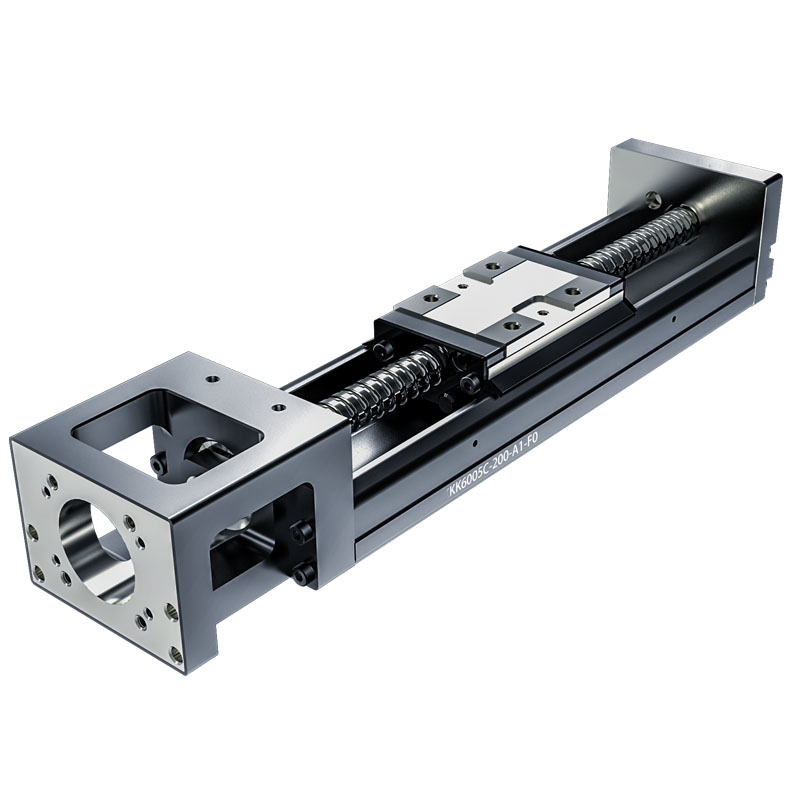
For OEM manufacturers and automation integrators, multi-slider linear modules can significantly improve efficiency while reducing equipment complexity and costs.
A multi-slider synchronous linear module is a linear motion system equipped with two or more sliders (carriages) that move along the same guide rail while maintaining a fixed relative position.
Instead of using multiple independent actuators, a single drive system moves all sliders simultaneously.
Typical applications include:
This synchronized motion helps increase throughput while reducing the number of motors and controllers required.
Several design methods can be used to achieve synchronized movement.
A belt-driven linear module is one of the most common solutions.
In this configuration:
Advantages include:
This solution is widely used in high-speed automation applications.
For large-scale automation systems, rack-and-pinion mechanisms can synchronize multiple moving elements.
Benefits include:
These systems are often used in heavy-duty industrial equipment.
A ball screw linear module can also support multiple sliders mounted on a common carriage platform.
Advantages include:
This approach is suitable for applications requiring precision rather than maximum speed.
One of the most advanced forms of multi-slider motion is the Variable Pitch Module.
Unlike fixed synchronous movement, a variable pitch system allows:
This technology is increasingly used in packaging, battery manufacturing, and automated assembly lines.
Multiple products can be moved simultaneously.
Benefits include:
Using one drive system for multiple sliders reduces:
This lowers overall machine costs.
Compared with using multiple independent actuators, a synchronized module offers:
Because all sliders are driven by the same mechanism:
Multiple parts can be transferred simultaneously between workstations.
Suitable for:
Used for:
Supports synchronized movement of multiple battery cells or modules.
Improves efficiency by handling multiple products in a single motion cycle.
| Feature | Multi-Slider Linear Module | Independent Actuators |
|---|---|---|
| Equipment Cost | Lower | Higher |
| Control Complexity | Simple | Complex |
| Synchronization Accuracy | Excellent | Depends on Control System |
| Maintenance | Easier | More Components |
| Installation Space | Compact | Larger |
| Production Efficiency | High | Moderate |
For many automation applications, synchronized systems provide a more efficient solution.
Before selecting a multi-slider linear module, engineers should evaluate:
Determine how many carriers must move simultaneously.
Longer strokes may favor belt-driven designs.
Consider both individual and total payloads.
Ball screw systems may be preferred for high-precision applications.
High-speed applications often benefit from belt-driven modules.
Choose a modular system that can accommodate future production changes.
Standard linear modules may not meet all production requirements.
Custom multi-slider linear motion systems can provide:
These solutions help manufacturers maximize efficiency while maintaining flexibility.
As Industry 4.0 adoption increases, multi-slider systems are evolving through:
These technologies support increasingly complex automated production environments.
So, can linear modules support multi-slider synchronous motion? Absolutely.
Modern linear motion technology allows multiple sliders to move in perfect synchronization using belt-driven, ball screw, rack-and-pinion, or variable pitch mechanisms. This capability enables manufacturers to increase productivity, reduce equipment costs, and simplify automation system design.
For OEM manufacturers and automation integrators, a custom multi-slider linear module offers an effective solution for handling multiple products simultaneously while maintaining precision, reliability, and long-term operational efficiency.