In industrial automation systems, efficient motion transmission is essential for achieving precise positioning, high-speed transportation, and synchronized production processes. One commonly used solution is the belt conveyor module, which converts the rotational motion of a motor into smooth and controlled linear movement.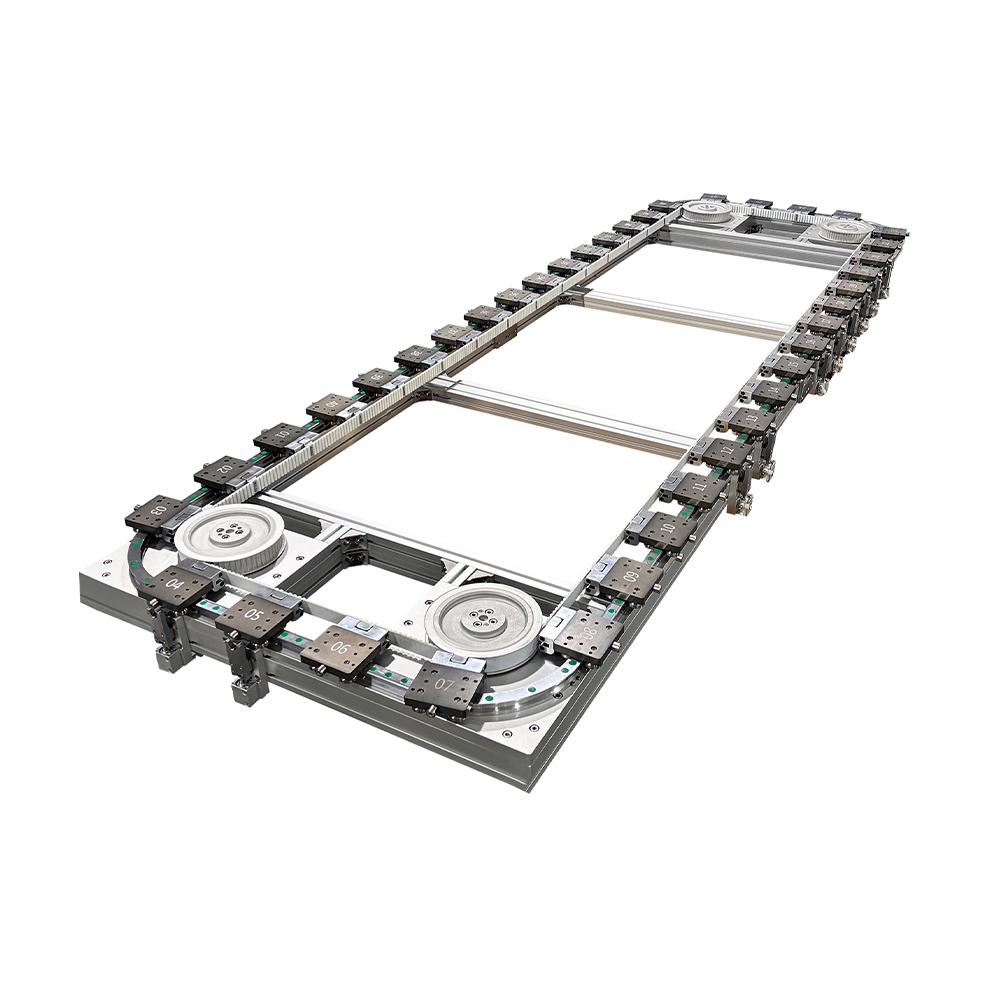
For OEM manufacturers, automation integrators, and machine builders, understanding how a belt conveyor module works is important when selecting the right motion solution for custom automation equipment.
A belt conveyor module is a linear motion system that uses a motor-driven belt mechanism to move a carriage or platform along a straight path. It combines:
This structure allows the module to deliver fast, smooth, and repeatable linear motion for industrial automation applications.
The working principle of a belt driven linear module is based on the transmission of rotational force through a timing belt system.
A servo motor or stepper motor produces rotational movement. The motor shaft is connected to the drive pulley.
As the motor rotates, the drive pulley moves the timing belt in a continuous loop. The belt is tensioned between the drive pulley and the idle pulley.
The moving belt is mechanically connected to the carriage or slider. As the belt moves, the carriage travels linearly along the guide rail.
The linear guide rail supports the carriage and ensures smooth, accurate, and low-friction movement during operation.
Compared to other linear motion systems, belt conveyor modules offer several important advantages.
Timing belt systems support fast movement and rapid acceleration.
Suitable for applications requiring long travel distances.
Belt-driven systems reduce vibration and operating noise.
Provides excellent performance for many industrial automation applications.
Can be combined into XY or XYZ robotic systems.
When choosing a linear motion system, engineers often compare belt conveyor modules with ball screw systems.
The ideal solution depends on application requirements for speed, accuracy, and payload.
Industrial belt conveyor modules are widely used in:
Supports fast and synchronized product transfer.
Improves production speed and automation efficiency.
Provides linear movement for XYZ automation systems.
Suitable for precision transport and positioning tasks.
Optimizes workflow and automated transportation.
Standard modules may not meet the exact requirements of specialized automation equipment. This is why many OEM companies choose custom belt conveyor module solutions.
Customization options include:
Custom solutions improve machine integration and overall production efficiency.
When selecting a supplier for belt conveyor module systems, consider:
A reliable manufacturer can help optimize machine performance and reduce operational risks.
As industrial automation continues to demand faster and more flexible motion systems, the belt conveyor module remains one of the most practical and efficient linear motion solutions.
By understanding how a belt conveyor module converts motor rotation into linear motion, OEM manufacturers and automation integrators can select the right system for their applications and develop customized automation equipment with improved speed, efficiency, and reliability.