In today’s competitive global market, manufacturers are under increasing pressure to improve efficiency, reduce costs, and maintain consistent product quality. Industrial automation systems have become a critical solution for achieving these goals, especially for B2B customers who require tailored, application-specific solutions.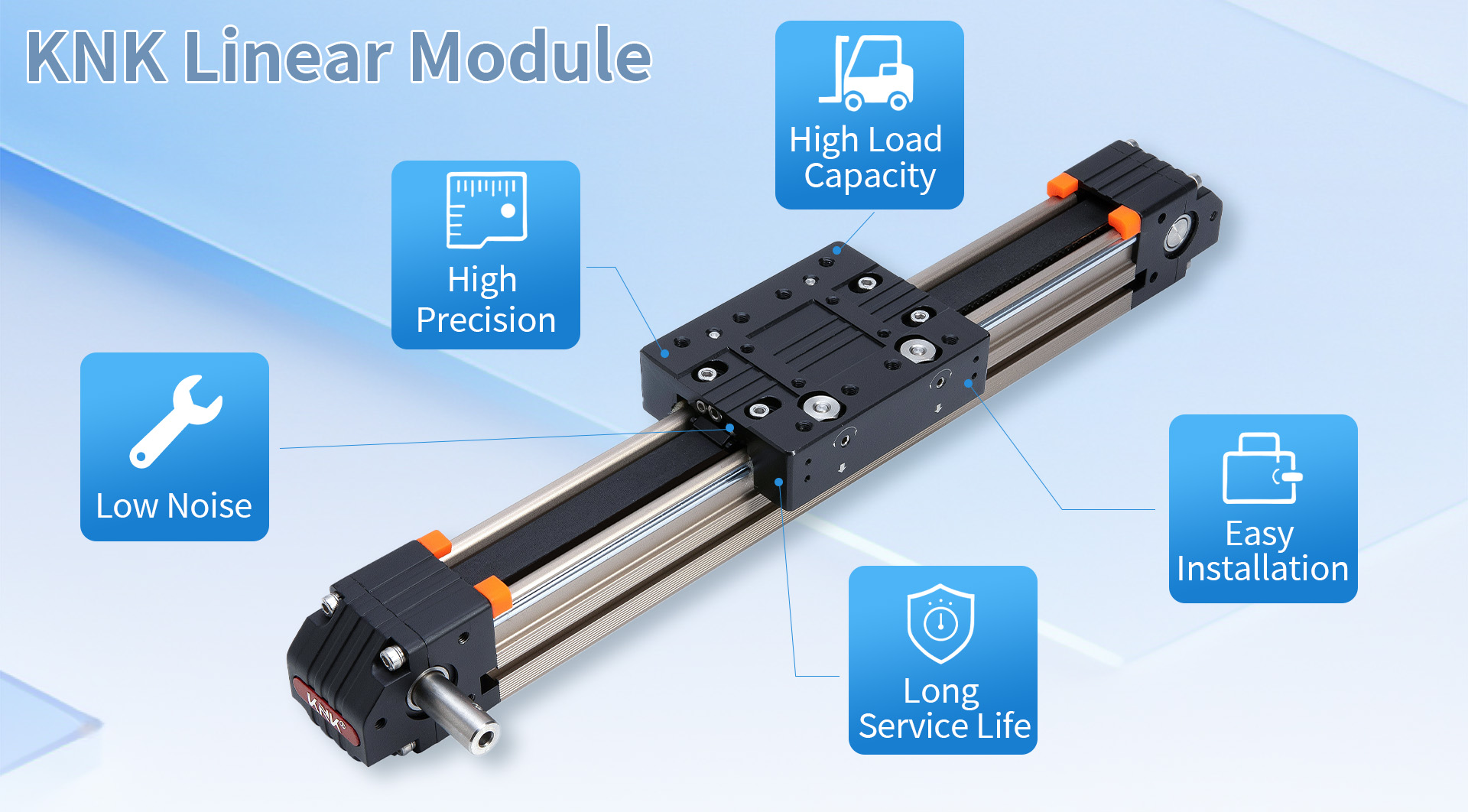
Unlike standard equipment, modern automation systems are highly customizable and can be designed to meet the exact needs of different industries. By integrating advanced components such as linear actuators and XY positioners, businesses can build precise, scalable, and high-performance production systems.
Industrial automation systems are integrated solutions that use mechanical, electrical, and software technologies to automate manufacturing and production processes. These systems are designed to reduce manual intervention, improve accuracy, and increase throughput.
A complete automation system typically includes:
Together, these components create a seamless and efficient production environment.
For B2B customers, off-the-shelf solutions often fail to meet specific production requirements. Custom industrial automation systems offer several key advantages:
Every production line has unique requirements. Custom automation systems are designed based on product specifications, workflow, and production goals.
Automation reduces manual processes, shortens cycle times, and increases overall production efficiency.
Custom systems can be expanded or upgraded as production demands increase, ensuring long-term value.
Precision motion components like linear actuators and XY positioners ensure consistent and accurate operations, reducing defects and improving quality control.
Linear actuators are essential components in industrial automation, providing precise linear motion for various tasks such as:
They are available in different drive types (ball screw, belt-driven, linear motor) to meet varying performance requirements such as speed, load capacity, and precision.
An XY positioner is a motion system that enables movement along two perpendicular axes (X and Y), allowing precise positioning in a two-dimensional plane.
When combined with linear actuators, XY positioners create powerful motion platforms for complex automation tasks.
Custom industrial automation systems are widely used across multiple industries:
These systems help businesses achieve higher efficiency, better quality, and reduced operational costs.
When designing a custom automation system, B2B clients should consider:
Production requirements: Output volume, cycle time, and workflow.
Precision needs: Accuracy and repeatability of motion systems.
Load capacity: Weight and size of handled products.
Integration: Compatibility with existing equipment and software.
Environment: Operating conditions such as temperature, dust, or cleanroom.
Working closely with an experienced automation provider ensures optimal system design and performance.
Selecting the right industrial automation systems manufacturer is critical for project success. A reliable partner should offer:
A professional partner ensures your automation system delivers long-term value and reliability.
As industries continue to move toward smart manufacturing and Industry 4.0, industrial automation systems are becoming essential for maintaining competitiveness. For B2B customers, customized solutions provide the flexibility, precision, and scalability needed to meet complex production demands.
By integrating advanced components such as linear actuators and XY positioners, businesses can build high-performance automation systems that improve efficiency, reduce costs, and enhance product quality.
Investing in a tailored automation solution is not just an upgrade—it is a strategic step toward future-ready manufacturing.