Linear motion modules are widely used in industrial automation equipment for positioning, transferring, feeding, and handling workpieces. However, different applications require different motion capabilities. A standard linear module is generally designed to move a load along a linear axis, while a variable-pitch module is designed to adjust the spacing between multiple positioning points or sliders.
Understanding the difference between these two systems helps equipment manufacturers select the right motion solution for their production requirements.
For OEM equipment manufacturers and system integrators, the main considerations include positioning flexibility, motion sequence, production speed, mechanical layout, and integration with the control system.
A standard linear module is a mechanical motion unit that converts rotary motion or another drive input into controlled linear movement. It typically consists of a guide rail, drive mechanism, carriage, frame, and motor or motor interface.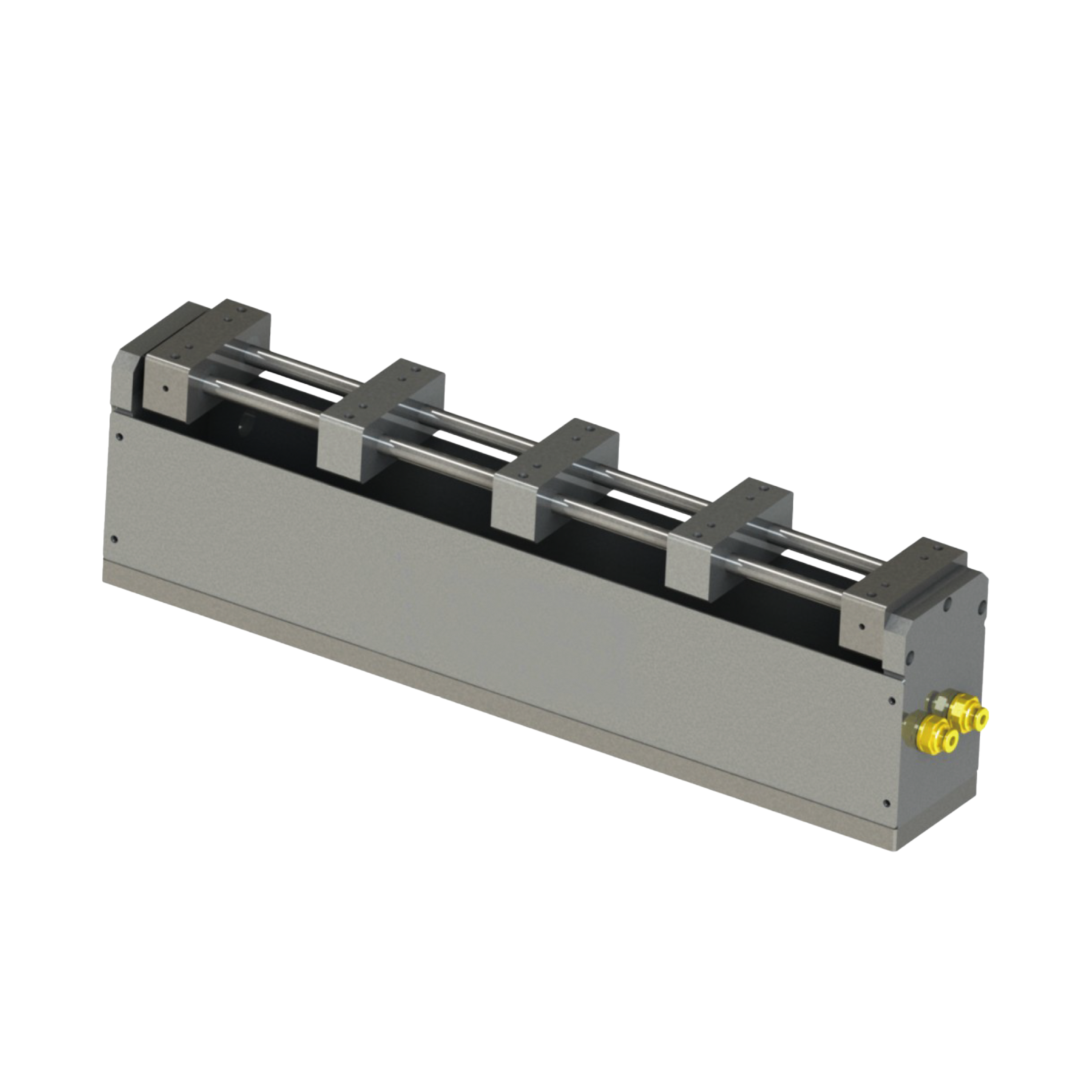
Depending on the application, the drive mechanism may use a timing belt, ball screw, rack and pinion, or linear motor.
A standard linear module is suitable for applications where a carriage needs to move between defined positions along a single axis. The stroke, speed, payload, and positioning performance can be selected according to the machine's requirements.
Typical features include:
Straight-line movement: Moves a carriage along a defined linear path.
Flexible stroke options: Can be selected or customized to fit the required working range.
Multiple drive configurations: Belt-driven, ball screw-driven, rack-and-pinion, or linear motor solutions.
Automation integration: Can be combined with servo motors, sensors, controllers, and multi-axis systems.
Versatile applications: Used in pick-and-place equipment, dispensing machines, inspection systems, loading and unloading stations, and automated production lines.
A standard linear module is often the practical choice when the machine requires reliable single-axis movement without a mechanism for actively changing the spacing between multiple working positions.
A variable-pitch module is a specialized motion system designed to change the distance between multiple sliders, grippers, fixtures, or workpieces. Instead of simply moving one carriage along a fixed axis, it coordinates the movement of multiple positioning points to achieve a required spacing arrangement.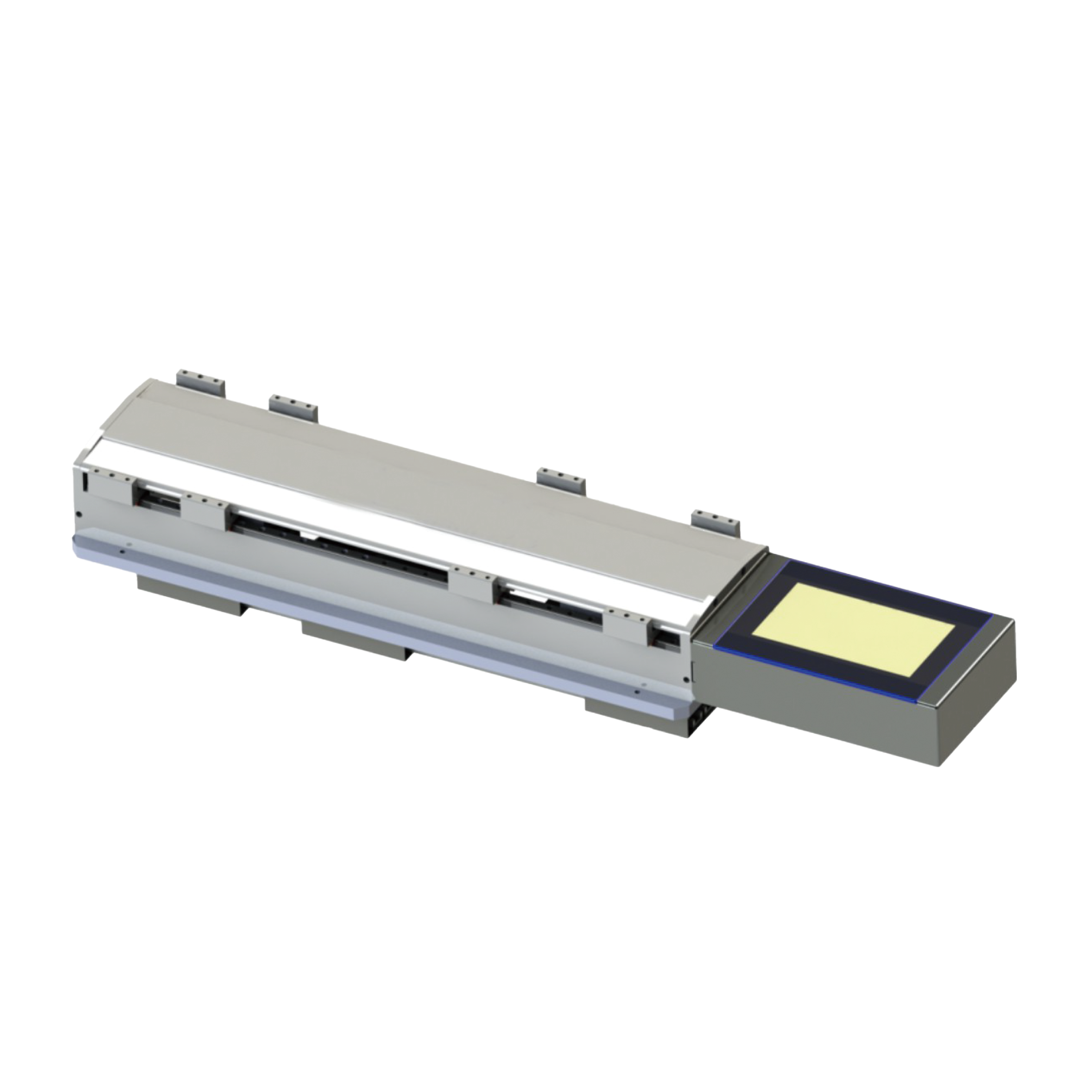
For example, a machine may receive products at a relatively narrow spacing and need to transfer them to another station where the products are positioned farther apart. A variable-pitch module can adjust the spacing during the transfer process, depending on its mechanical design and control configuration.
Variable-pitch systems can be designed for synchronized movement, adjustable spacing, and repeated positioning sequences. Some configurations use a common drive mechanism to coordinate multiple sliders, while others use more complex drive and control arrangements.
Typical features include:
Adjustable spacing: Changes the distance between multiple sliders or working positions.
Coordinated movement: Helps maintain a defined relationship between multiple positioning points.
High-speed handling potential: Can support rapid transfer and spacing adjustment when designed for the required cycle time.
Customized configurations: Slider count, pitch range, stroke, mounting dimensions, and motion sequence can be tailored to the equipment.
Multi-position operation: Useful for applications involving multiple products, components, or grippers in one motion cycle.
The key advantage is not simply linear movement, but the ability to coordinate multiple positions and adjust their relative spacing.
The following table summarizes the main differences.
|
Comparison |
Standard Linear Module |
Variable-Pitch Module |
|---|---|---|
|
Primary function |
Moves a carriage along a linear axis |
Adjusts spacing between multiple positioning points |
|
Motion configuration |
Usually one carriage or a fixed slider arrangement |
Multiple coordinated sliders or working positions |
|
Pitch adjustment |
Not a standard function |
A core function |
|
Position relationship |
Primarily controls carriage position |
Controls both position and relative spacing |
|
Mechanical complexity |
Generally simpler |
Usually more specialized |
|
Control requirements |
Depends on axis and application |
Must account for pitch adjustment and coordination |
|
Typical applications |
Transfer, positioning, dispensing, inspection |
Multi-product handling, spacing adjustment, synchronized pick-and-place |
|
Customization |
Stroke, payload, drive type, mounting |
Pitch range, slider count, stroke, motion sequence, mounting |
|
Best suited for |
Conventional single-axis linear motion |
Processes requiring adjustable spacing between multiple positions |
The exact capabilities of either system depend on the selected mechanical structure, drive method, motor, feedback devices, and control strategy.
A standard linear module primarily controls the position, speed, and acceleration of its carriage. For example, a module may move a component from a loading station to an inspection station and then return to its starting position.
The system can use programmed motion profiles and position feedback to meet the machine's cycle-time and repeatability requirements.
A variable-pitch module must coordinate multiple positioning points while adjusting their spacing. Its motion sequence may include moving products together, separating them to a specified pitch, transferring them to another station, and returning to the initial configuration.
The design must consider more than the travel distance of an individual slider. Engineers also need to evaluate:
The minimum and maximum achievable pitch.
The number and payload of the sliders.
Whether all sliders move synchronously.
The required pitch-adjustment time.
Positioning repeatability at each working point.
Interference between products, grippers, and adjacent mechanisms.
For machines handling multiple products in one cycle, these factors can directly affect throughput and equipment layout.
Standard Linear Module
Suitable for single-axis positioning, automated inspection, dispensing, laser processing, component transfer, loading and unloading, and XYZ gantry systems. It is a good fit when a carriage needs to travel along a defined path without changing the spacing between multiple work positions.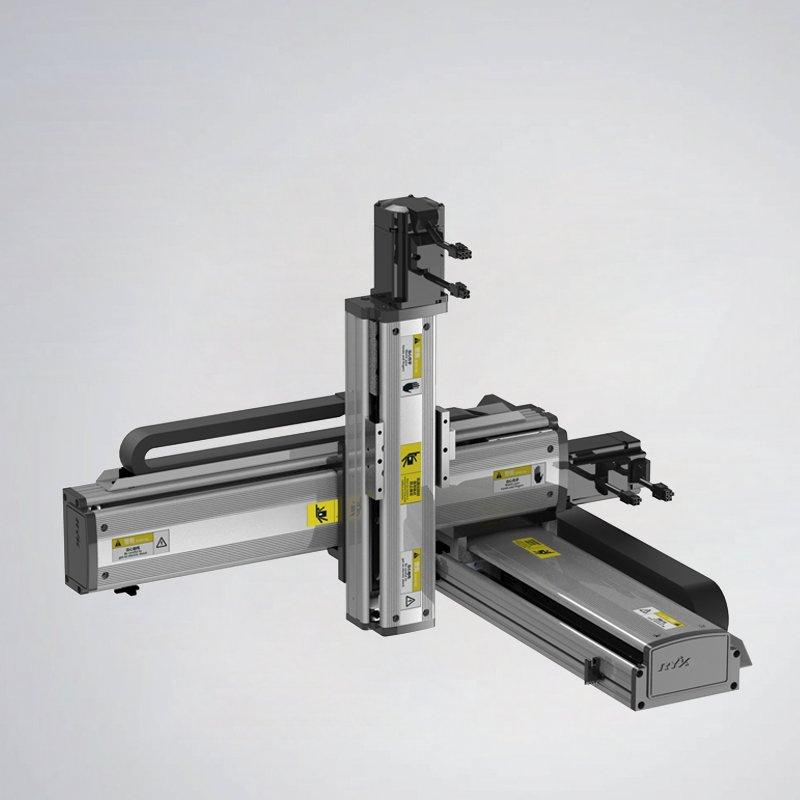
Variable-Pitch Module
Suitable for multi-head pick-and-place systems, parallel component transfer, product spacing adjustment, multi-station assembly, packaging preparation, and automated handling processes where the distance between products or grippers must change.
Imagine an assembly machine that receives four components at a pitch of 30 mm, but the next station requires them to be spaced 60 mm apart.
A standard linear module can transfer the components along an axis, but changing the spacing may require an additional mechanism or separate handling steps.
A suitably designed variable-pitch module can coordinate the four positions and adjust the pitch from 30 mm to 60 mm within the required motion sequence. This can simplify the handling process and reduce the need for separate spacing operations.
The actual achievable pitch range, adjustment time, payload, and repeatability must be confirmed against the specific module design.
The best choice depends on the machine's movement requirements rather than the product name alone.
Choose a standard linear module when:
The machine primarily requires one carriage to move along a straight axis.
The distance between working positions remains fixed.
The application prioritizes stroke, speed, payload, and positioning performance.
A straightforward linear motion structure is sufficient.
Choose a variable-pitch module when:
Multiple sliders, grippers, or products must be handled together.
Product spacing must change between process stations.
Several positions need coordinated movement.
The machine requires a customized pitch range or motion sequence.
Reducing separate spacing-adjustment steps could simplify the equipment design.
For some machines, the two technologies can also be combined. A standard linear module may provide the main transfer axis, while a variable-pitch mechanism adjusts the spacing of multiple workpieces.
Standard catalog products do not always meet the mechanical and motion requirements of specialized automation equipment. OEM manufacturers may need customized stroke lengths, mounting interfaces, slider arrangements, pitch ranges, and drive configurations.
When evaluating a custom solution, equipment designers should define the following parameters:
Working stroke: The required linear travel distance.
Pitch range: The minimum and maximum spacing between working positions.
Number of sliders: How many products, fixtures, or grippers must move together.
Payload: The mass carried by each slider and the total moving mass.
Cycle time: The required transfer and pitch-adjustment time.
Positioning performance: Required accuracy and repeatability for each working position.
Drive and control system: Motor type, feedback requirements, controller compatibility, and synchronization method.
Installation conditions: Available space, mounting direction, operating environment, and integration with other machine components.
Providing these details early helps the manufacturer assess feasibility and recommend a suitable structure.
KNK Technology provides linear motion products for industrial automation, including linear modules and variable-pitch positioning solutions. For equipment manufacturers developing custom pick-and-place or multi-position handling systems, the appropriate configuration should be selected according to the required pitch, payload, motion sequence, and integration conditions.