When selecting a linear motion solution for an automation project, one of the most common questions engineers ask is: Why are ball screw linear modules more expensive than belt driven linear modules?
At first glance, both products perform the same basic function—converting rotary motion into precise linear movement. However, their internal structures, manufacturing processes, performance capabilities, and application scenarios are significantly different. These differences directly affect both purchase cost and long-term value.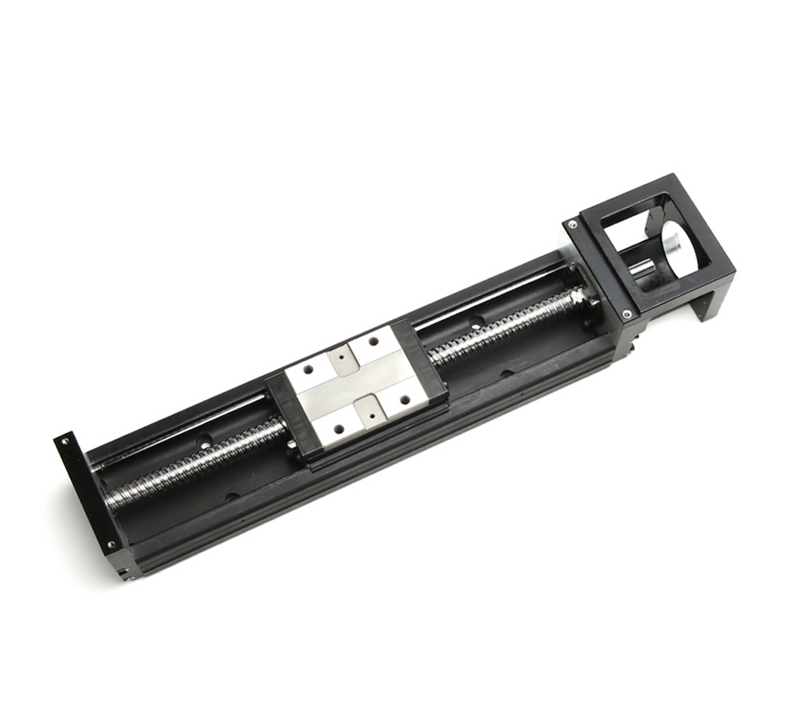
For OEM machine builders and automation integrators, understanding these differences helps ensure the right investment for each application.
A ball screw linear module is a precision linear motion system that uses a ball screw and ball nut assembly to convert rotary motion into highly accurate linear movement.
Its main components typically include:
Ball screw modules are widely used in applications requiring high precision, high rigidity, and excellent repeatability.
A belt driven linear module uses a precision timing belt and pulley system to generate linear motion.
The main components include:
Belt-driven modules are ideal for high-speed and long-stroke applications where ultra-high precision is not the primary requirement.
The biggest cost difference comes from the ball screw itself.
High-quality ball screws require:
These manufacturing processes are far more demanding than producing timing belts and pulleys, resulting in higher production costs.
Ball screw modules are designed for applications requiring exceptional precision.
Typical advantages include:
This makes them suitable for semiconductor equipment, electronics assembly, laser processing, and precision inspection.
Higher precision requires higher-quality components and tighter assembly standards, which increase the overall cost.
A ball screw provides direct mechanical transmission with excellent structural stiffness.
Compared with belt-driven modules, it generally offers:
These characteristics require stronger materials and more robust engineering.
A ball screw linear module requires careful alignment of:
Improper assembly can reduce positioning accuracy and shorten service life.
This additional manufacturing effort contributes to higher production costs.
High-quality ball screw modules often use premium components such as:
These components increase reliability but also raise manufacturing costs.
Not necessarily.
The best solution depends on the application rather than the purchase price.
If your project requires:
a ball screw linear module is usually the better investment.
If your priority is:
a belt driven linear module may provide better overall value.
| Feature | Ball Screw Linear Module | Belt Driven Linear Module |
|---|---|---|
| Positioning Accuracy | Very High | High |
| Repeatability | Excellent | Good |
| Maximum Speed | Moderate | High |
| Long Stroke Capability | Moderate | Excellent |
| Load Capacity | High | Medium |
| Structural Rigidity | High | Moderate |
| Purchase Cost | Higher | Lower |
| Maintenance | Moderate | Low |
Each system is designed to solve different engineering challenges.
Used for:
High accuracy is essential for product quality.
Applications include:
Reliable positioning ensures consistent performance.
Ball screw modules support:
Their rigidity improves machining accuracy.
Ideal for:
Accurate motion improves processing quality.
Vision systems require repeatable positioning for accurate measurements and quality control.
A belt-driven solution is often the better choice when:
Applications include:
Standard products rarely satisfy every application.
Custom linear modules can be optimized for:
Designed specifically for machine layouts.
Matched to actual production requirements.
Optimized for cycle time.
Compatible with existing equipment.
Supports preferred servo or stepper brands.
Available for dusty, humid, or cleanroom environments.
Customization helps improve machine performance while avoiding unnecessary costs.
Before choosing between a ball screw and belt-driven module, engineers should evaluate:
Working with an experienced linear module manufacturer ensures the selected solution matches both technical requirements and long-term operational goals.
Modern linear modules continue to evolve with:
These innovations improve both productivity and equipment reliability.
Although ball screw linear modules are generally more expensive than belt driven linear modules, the additional cost reflects their higher precision, greater rigidity, superior load capacity, and more complex manufacturing process. For applications that demand accurate positioning and consistent repeatability, they provide excellent long-term value.
However, for high-speed, long-travel, and cost-sensitive automation projects, a belt driven linear module may be the more practical solution.
For OEM machine builders and automation integrators, the best choice is not simply the cheaper or more expensive option—but the one that is properly engineered for the application. Partnering with an experienced linear module manufacturer ensures you receive a customized solution that balances performance, reliability, and cost.