XYZ Linear Slide: Features and Applications for Custom Automation
An XYZ linear slide is a three-axis linear motion system that moves a tool, workpiece, sensor, or other component along three perpendicular directions: X, Y, and Z. It is widely used in industrial automation where equipment needs flexible positioning within a defined three-dimensional working area.
An XYZ linear slide typically combines three linear motion axes, supporting structures, drive mechanisms, motors, and a control system. Depending on the application, the axes may use belt-driven linear modules, ball screw modules, gear rack linear modules, or linear motor stages.
Compared with a single-axis linear slide, an XYZ system provides movement in three directions without requiring a separate robot for every positioning task. It can be configured for different working ranges, payloads, speeds, installation spaces, and accuracy requirements.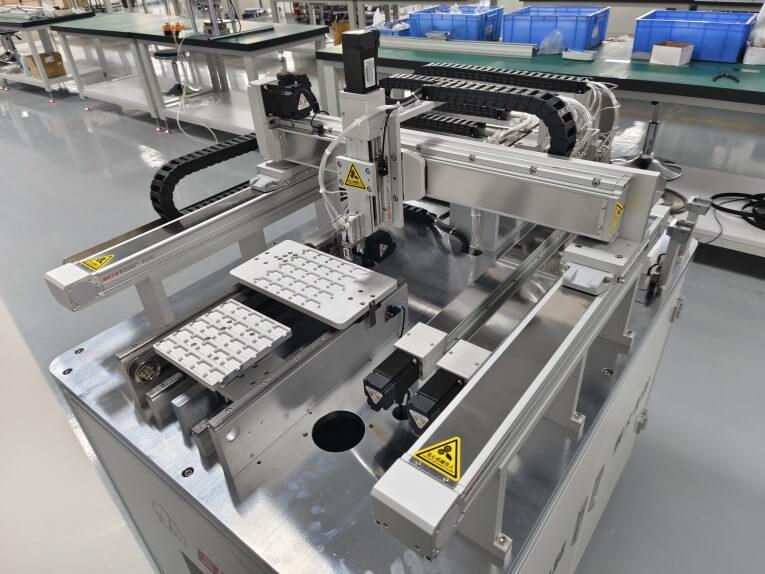
For OEM equipment manufacturers and automation integrators, a custom XYZ linear slide can be designed around the actual machine layout and production process.
The main feature of an XYZ linear slide is its ability to provide controlled linear movement along three axes.
X-axis: Horizontal movement along the primary direction.
Y-axis: Cross-axis movement across the working area.
Z-axis: Vertical movement for lifting, lowering, or tool positioning.
The three axes can work independently or coordinate through a motion controller to reach programmed positions. This structure is useful for applications that require a tool or workpiece to move between multiple points within a three-dimensional space.
For custom equipment, each axis can be specified according to its individual travel distance, speed, load, and positioning requirements.
Different machines require different travel ranges. A standard XYZ linear slide may not provide the required working area or fit the available installation space.
Custom XYZ linear slides can be configured according to:
X-, Y-, and Z-axis stroke lengths
Overall system dimensions and mounting positions
Required working area and machine layout
Axis arrangement and support structure
Motor position and cable routing
End-effector, gripper, or tool mounting interfaces
For example, a compact inspection machine may require short strokes and a small footprint, while a material handling system may need longer horizontal travel and a larger vertical range.
Defining the effective working area and installation dimensions early helps reduce redesign during equipment development.
The drive mechanism affects the system's speed, load capacity, positioning performance, and cost. Different axes within the same XYZ linear slide may use different drive technologies according to their functions.
|
Drive type |
Main characteristics |
Typical applications |
|---|---|---|
|
Belt-driven linear module |
Suitable for relatively long travel and high-speed movement |
Material transfer, pick-and-place |
|
Ball screw linear module |
Suitable for controlled positioning and applications requiring good repeatability |
Precision assembly, inspection |
|
Gear rack linear module |
Suitable for long travel and demanding loads when appropriately configured |
Large gantry systems, machine transfer |
|
Linear motor module |
Direct-drive technology with high dynamic performance potential |
High-speed positioning, precision inspection |
The appropriate configuration depends on stroke, payload, acceleration, duty cycle, positioning requirements, and operating environment.
For custom XYZ systems, the X, Y, and Z axes do not necessarily need to use the same drive technology.
Each axis of an XYZ linear slide carries a different portion of the system load. The X-axis may support the Y-axis assembly, while the Z-axis may carry a gripper, camera, dispensing head, or other end-effector.
The design must therefore consider not only the payload at the end of the system but also the weight of the moving axes and supporting components.
Important design factors include:
Payload and center of gravity
Overhung load and moment requirements
Guide rail size and spacing
Structural rigidity and vibration
Vertical-axis braking or load-holding requirements
Acceleration and deceleration forces
Properly matching the structure and drive system helps improve operational stability and supports the required service life.
XYZ linear slides are used in applications where components must reach defined positions repeatedly. The required positioning performance varies depending on whether the system performs basic material transfer, precision assembly, optical inspection, or other tasks.
Actual accuracy and repeatability depend on the linear module, drive mechanism, guide system, motor and feedback configuration, controller, structural stiffness, installation quality, and payload.
For demanding applications, customers should specify the required positioning tolerance for each axis rather than simply requesting a “high-precision” system. This allows the manufacturer to recommend an appropriate configuration.
Custom XYZ linear slides can be integrated with servo motors, stepper motors, PLCs, motion controllers, sensors, and other automation equipment.
Depending on the application, the system may support:
Coordinated three-axis movement
Programmable positioning sequences
Home and limit sensors
Position feedback
Customized motor and mounting arrangements
Integration with cameras, grippers, dispensers, and fixtures
Control requirements should be considered alongside the mechanical design to ensure the axes can operate according to the intended production cycle.
XYZ linear slides are used across industrial automation whenever controlled movement in three dimensions is required.
3.1 Pick-and-Place Automation
An XYZ linear slide can move a gripper between supply areas, fixtures, conveyors, and processing stations. Custom axis strokes and end-effector interfaces help adapt the system to different product sizes and machine layouts.
3.2 Dispensing and Adhesive Application
Three-axis linear motion systems can guide dispensing nozzles along programmed paths. They are useful for adhesive application, sealant dispensing, coating, and other processes requiring controlled movement across a workpiece.
3.3 Machine Vision and Inspection
An XYZ linear slide can position cameras, sensors, or workpieces at multiple inspection points. Custom working ranges and coordinated axis movement can support automated measurement, visual inspection, and testing equipment.
3.4 Electronics and Precision Assembly
In electronics manufacturing, XYZ systems can position components, tools, and fixtures during assembly or testing. The required accuracy, motion speed, and vibration control should be matched to the process.
3.5 Machine Loading and Unloading
Custom XYZ gantry systems can transfer workpieces into and out of CNC machines, processing stations, or automated production equipment. Longer travel distances, heavier payloads, and machine access requirements often influence the structural design.
3.6 Laboratory and Testing Equipment
XYZ linear slides can move samples, probes, or measurement devices between defined positions. Custom dimensions and control interfaces allow integration into specialized laboratory and automated testing systems.
An XYZ linear slide combines multiple axes into one positioning system, while a single-axis linear slide provides movement along only one direction.
|
Design consideration |
Single-axis linear slide |
XYZ linear slide |
|---|---|---|
|
Motion direction |
One linear direction |
Three linear directions |
|
Working area |
Along one axis |
Three-dimensional working area |
|
Mechanical configuration |
Relatively simple |
Requires coordinated axis mounting |
|
Control requirements |
Single-axis control may be sufficient |
Often requires coordinated multi-axis control |
|
Typical applications |
Transfer, adjustment, simple positioning |
Pick-and-place, dispensing, inspection, gantry automation |
|
Customization |
Stroke, load, motor, mounting |
Individual axis strokes, payloads, layout, and control |
A single-axis slide is suitable when the machine needs movement in only one direction. An XYZ linear slide is more appropriate when the application requires positioning across a working area in three dimensions.
For OEM machinery manufacturers, customization is often necessary because the working area, payload, installation dimensions, and operating cycle vary between machines.
A custom XYZ linear slide can be developed around the actual movement requirements rather than forcing the equipment design to fit a standard configuration.
Common customization options include:
Different stroke lengths for each axis
Belt-driven, ball screw, gear rack, or linear motor configurations
Custom mounting plates and connection interfaces
Motor and sensor selection
Special Z-axis payload and load-holding requirements
Cable management and protective covers
Integration with grippers, cameras, dispensers, or fixtures
Single-machine or production-line integration
For example, a high-speed pick-and-place machine may prioritize acceleration and cycle time, while an inspection machine may prioritize positioning repeatability, structural stability, and controlled movement.
These different requirements should guide the design of each axis.
Before requesting a quotation, equipment manufacturers should prepare the following information.
1. Working area and stroke: Specify the required X-, Y-, and Z-axis travel distances.
2. Payload: Include the workpiece, gripper, tooling, sensors, and the weight of moving axis assemblies.
3. Speed and cycle time: Define the target operating speed, acceleration, and expected production cycle.
4. Positioning requirements: Specify the required accuracy and repeatability for each axis.
5. Installation dimensions: Provide the machine layout, available mounting space, and connection details.
6. Drive technology: Select an appropriate belt-driven, ball screw, gear rack, or linear motor configuration for each axis.
7. Motor and control system: Confirm motor type, feedback requirements, controller compatibility, and coordinated movement needs.
8. Operating environment: Consider dust, temperature, vibration, lubrication, and any special protection requirements.
9. Mechanical safety: For vertical axes, evaluate braking, load retention, and the consequences of power loss.
10. Integration requirements: Identify the gripper, fixture, camera, conveyor, or other equipment that the XYZ system must connect to.
Providing this information helps the manufacturer evaluate the complete application and recommend a suitable configuration.
A suitable manufacturer should be able to evaluate the mechanical and control requirements of the complete three-axis system, not just recommend three independent linear modules.
For OEM customers, useful supplier capabilities include application assessment, drive technology selection, custom stroke and mounting design, motor integration, technical drawings, and coordination between axes.
KNK Technology provides linear motion products and customized solutions for industrial automation. Customers developing three-axis positioning systems can explore the KNK Technology website to review available linear motion products and discuss project requirements with the engineering team.
When contacting a supplier, providing a machine layout, payload information, axis strokes, target cycle time, and positioning requirements can help speed up the technical evaluation.